Smith Clinic Evaluations
In-Depth Neuropsychological Evaluations that Go Beyond the Numbers
Neuropsychological Testing | An Introduction
Stephanie Smith, founder of Smith Clinic, leads an amazing, and expert team of neuropsychologists who share her commitment to in-depth evaluations and personalized insights.
By bringing a wealth of experience and a shared passion for going beyond the numbers to provide comprehensive evaluations with strength-based personalized recommendations, planning for targeted interventions, all guided by a shared commitment to empowering individuals.
The impact of these evaluations over the years have been staggering, by offering improved understanding, a strength-based outlook, reframing, what was before defects and negativity, to transform the lives of those the clinic has worked with.
These are some of the testing options we offer
In English and Portuguese, German & Spanish and more … on request.
A brief overview of evaluations and their purpose
There are many benefits to evaluations, assessments and testing. Each type of evaluation serves a unique purpose in understanding an individual’s day-to-day learning and behavior and below is a summary of each.
| Neuropsychological Testing | Assesses higher order cognitive abilities and their relationship with behavior and emotions. |
| Psychological Testing | Evaluates an individual’s emotional, social, and behavioral functioning, including mood, anxiety, self esteem, and coping strategies. |
| Executive Functions Testing | Examines an individual’s ability to plan, organize, initiate, and regulate their behavior. |
| Diagnostic Mental Health | A comprehensive evaluation aimed at identifying specific learning, developmental, or psychological disorders. Autism | ADHD | Anxiety | Depression | And more… |
| Social | Emotional Skills | Assesses an individual’s ability to understand, express, and regulate their emotions, as well as their emotional response to various situations. |
| Social Skills | Examines an individual’s ability to interact with peers, communicate effectively, and navigate social situations. |
| Academic Testing | Focus on an individual’s academic achievement, learning strengths, and areas of difficulty. |
| Fine & Gross Motor Skills Testing | Individual’s physical coordination, dexterity, and motor development |
A word from Stephanie
I remember as a young mom, trying to wrap my head around all of the terminology around all the choices and variety of what my kids were being recommended to do. Turns out we are a family full of wonderful neurodiverse people.
It’s important to remember that evaluations, tests, and assessments are not designed to label or judge an individual, but rather they are tools to help us better understand how each unique individual learns and develops.
They provide the most effective support and guidance for each unique individual. The process may seem overwhelming, but please know that I’m here to walk with you every step of the way. Ensuring that each individual, and their family, feels comfortable and supported all throughout the evaluation, testing or assessment process. This is part of our unique and boutique service, that I have established at the clinic.
I understand that the various names like evaluations, testing, or assessments can be quite daunting and cause some anxiety. Let me help clarify the differences between these terms and provide some reassurance | What are Evaluations? Testing? Assessments?
Evaluations
Evaluations, are comprehensive, in depth examinations that look at an individual’s overall functioning across multiple domains, such as cognitive abilities, academic skills, motor development, and social emotional well being. These evaluations are designed to provide a deep understanding of an individual’s strengths, challenges, and unique needs. They often involve a combination of standardized tests, observations, and interviews.
The key purpose of an evaluation is to identify any underlying issues or areas that may be impacting an individual’s development and daily functioning. This information is then used to develop a tailored support plan to help an individual thrive.
Testing
Testing, on the other hand, typically refers to the administration of specific, standardized assessments that measure a particular skill or ability, such as intelligence, academic achievement, or psychological functioning. These tests are often used as part of a more comprehensive evaluation, but they can also be conducted on their own to gather targeted information.
The results of these tests provide valuable data points that, when combined with other evaluation components, help paint a clearer picture of an individual’s overall profile.
Assessments
Assessments are broader in scope and can encompass both evaluations and testing. Assessments are the overall process of gathering information about an individual’s development, learning, and well being. This can include observations, interviews, review of records, and the administration of various tests and evaluations.
The goal of an assessment is to thoroughly understand an individual’s needs and strengths, so that appropriate interventions, accommodations, and support strategies can be implemented.
Treasure Hunt – A metaphor to explain the purpose of Evaluations
Adults’ Evaluations: Empowering Individuals
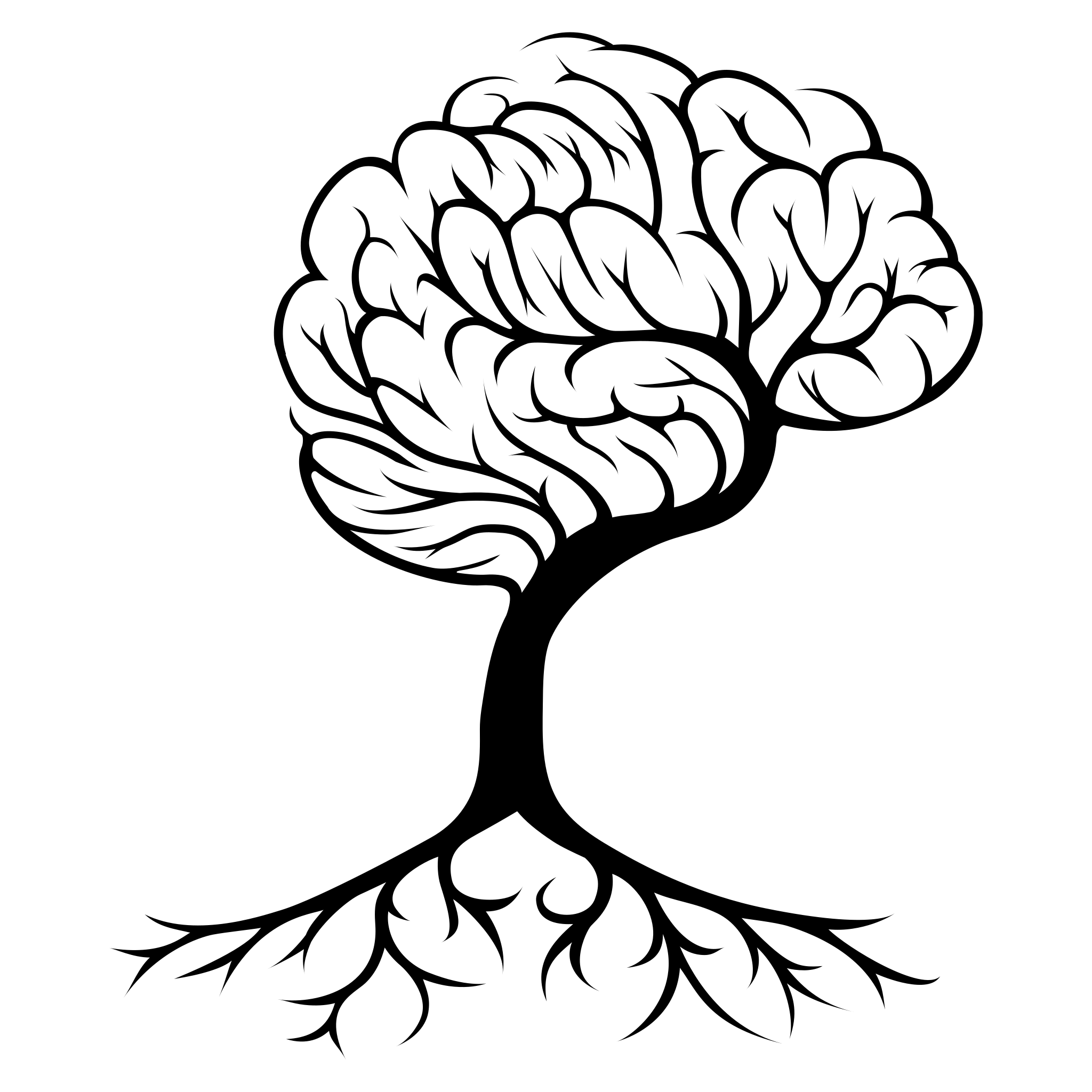
Explore the intricate networks of your mind, from neurons to synapses, and uncover and uncover the secrets of how you think, feel, connect and interconnect.
Discover Your Inner Treasure
The treasure map is designed to help us explore and understand the contents of this your treasure chest.
Your brain is a vast treasure map filled with sparkling gems. Each gem represents a new piece of knowledge, skill, or experience. Just like explorers on a quest, our brains are constantly discovering and connecting these gems, creating a rich network of pathways.
The brain’s ability to learn is not predetermined by biology; it has a limitless capacity to learn and adapt throughout our lives. Every new experience, task, or problem we solve strengthens the connections between these gems, just like forging new paths on our treasure map. These strengthened connections form habits, reinforce memories, and enhance skills.
Learning isn’t just something we do deliberately, like when we practice a new skill. It happens naturally as we go about our daily lives. Each time we use a particular pathway, it gets stronger. This process is like continuously polishing a gem, making it shine brighter.
Deliberate learning involves connecting related gems rather than just memorizing isolated facts. This way, the brain creates a stronger, more integrated network, making it easier to recall and apply knowledge.
Our hippocampus, a vital part of the brain for learning and memory, continues to produce around 700 new neurons daily. These new neurons help us keep expanding our treasure map, allowing for continuous growth and adaptation.
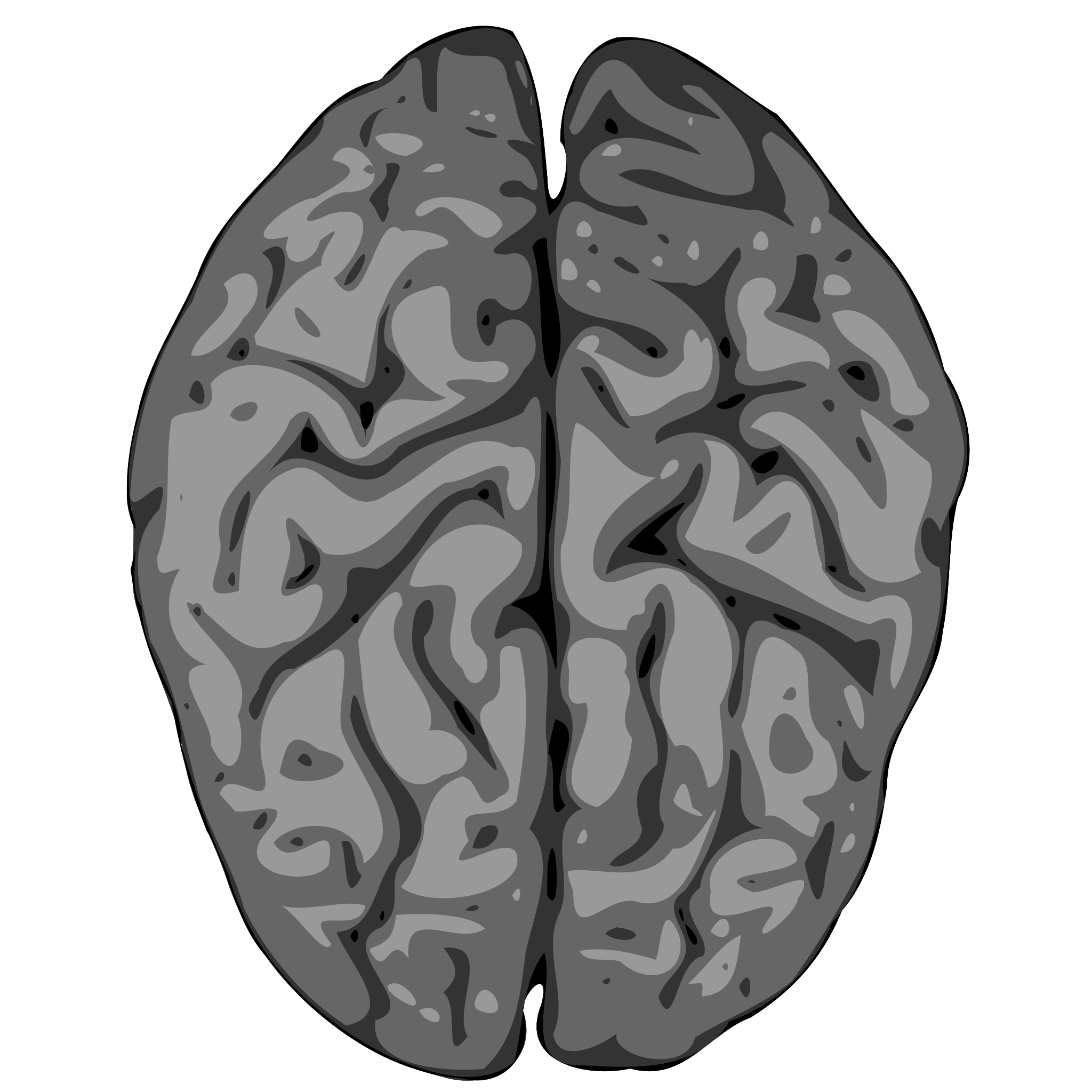
The connections between neurons, called synapses, are always changing. These dynamic connections are crucial for learning and memory. The vast network of synapses gives our brain its immense power, similar to the interconnected paths on our treasure map.
Neural pathways, the routes on our treasure map, are patterns of connected neurons that send electrical signals throughout the brain.
Major pathways that play key roles in our cognitive functions.
Executive functions
Our treasure hunt also includes examining executive functions—the skills needed for planning, organization, and self-regulation. These gems act like a treasure map, guiding thoughts, emotions, and actions. We’ll be on the lookout for hidden traps or puzzles that could affect overall functioning, such as specific learning, developmental, or psychological disorders.
Social skills
Social skills gems will provide insights into the ability to interact with peers, communicate effectively, and navigate social situations, revealing valuable information about social-emotional development.
Psychological and emotional well-being
We’ll uncover gems representing psychological and emotional well-being, examining factors like mood, anxiety, self-esteem, and coping strategies to understand their impact on daily life.
Extra Stuff
We’ll explore gems representing more academic like skills in core subjects like reading, writing, and math. This journey may take several sessions, with ongoing updates to keep you informed every step of the way.
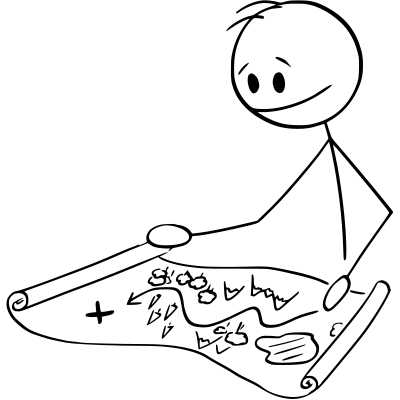
Detailed Treasure Map
This comprehensive treasure hunt will provide a detailed understanding of strengths, challenges, and overall development.
Our brains are like treasure maps with endless gems to discover!!
Each connection we make and strengthen adds to our brain’s incredible capacity to learn, adapt, and shine throughout our lives.
Kids’ Evaluations: Finding Potential with Insight
Let’s embark on an exciting treasure hunt together!
The metaphor to explain what evaluations are finding potential with insights: Lets go on a treasure hunt!!
A journey which will be filled with sparkling gems, each one representing the unique skills and abilities of your child. This isn’t just any treasure hunt; it’s a special adventure where the evaluation process itself becomes a thrilling exploration of your child’s inner world.
The treasure chest
But the treasure hunt doesn’t stop there! We’ll also discover gems that represent your child’s executive functions—the essential skills needed for planning, organization, and self-regulation. These are like the treasure maps, guiding your child’s thoughts, emotions, and actions.
Hidden traps or puzzles
Throughout our adventure, we’ll be on the lookout for any hidden traps or puzzles that might be affecting your child’s overall functioning. These could be challenges like learning disorders, developmental issues, or psychological concerns. By identifying these, we can better understand the path your child is navigating.
Emotional landscape
We’ll also explore gems that reflect your child’s psychological and emotional well-being, such as mood, anxiety, self-esteem, and coping strategies. These treasures will help us see how your child’s emotional landscape is shaping their daily life.
Social skills
And as we continue, we’ll examine the gems representing your child’s social skills—their ability to interact with peers, communicate effectively, and manage social situations. These insights will provide us with a deeper understanding of your child’s social-emotional development.
Academia
Finally, we’ll uncover the gems that shine a light on your child’s academic performance in core areas like reading, writing, and math. Each of these discoveries brings us closer to understanding your child’s strengths and challenges.
Comprehensive and insightful journey:
This treasure hunt will be a comprehensive and insightful journey into your child’s strengths, challenges, and overall development. We’ll use a variety of age-appropriate activities, games, and assessments to gather the gems that make up your child’s unique profile. The hunt may take place over several sessions, and we’ll keep you informed every step of the way.
So, are you ready to embark on this treasure hunt with us?
So, are you ready to embark on this treasure hunt with us? Together, we’ll uncover the treasures that lie within your child and chart a course for their bright future, filled with various gems representing their unique skills and abilities. The overall evaluation is like embarking on an exciting treasure hunt to explore and understand the contents of this chest.