
Our Transformative Services for Wellbeing
Innovative Care Solutions for You


Our Services in Detail
Below we have laid out some brief summaries and overviews of our various services, these have been laid out into 4 different sections, with section 1 as Testing, Evaluations and Assessments, section 2 therapy, section 3 Couples and Family and lastly section 4 Educational support, so, please read on and enjoy. (Use the table of contents – for easy access to each section)
- Our Services in Detail
- Testing, Evaluations and Assessments
- Neuropsychology | A brief summary
- Psychological evaluations | In Detail
- Social and Emotional | In detail
- Diagnostic Evaluations for Mental Health | In detail
- Academic evaluations | In detail
- Fine and Gross Motor Skills Evaluations | In detail
- Geriatric testing for alzheimer's – dementia | cognitive functions evaluations | In detail
- Psychotherapy and Counseling
- CBT | Cognitive Behavioral Therapy | A brief summary
- Clinical Psychology | A brief summary
- Psychoanalysis | A brief summary
- Jungian Therapy | A brief summary
- Analytic Behavioral Therapy| A brief summary
- Gestalt | A brief summary
- Dialectical Behavioral Therapy | DBT | A brief summary
- Play Therapy | A brief Summary
- Couples and Family Therapy
- Educational Support and Workshops
Testing, Evaluations and Assessments
Neuropsychology | A brief summary
Assessment of brain-behavior relationships | Neuropsychologists specialize in understanding how brain functioning affects behavior, cognition, and emotions.
Tailored interventions | Based on thorough assessments, they develop personalized treatment plans for neurological or cognitive impairments (e.g., after brain injury or stroke).
Insight into developmental disorders | Neuropsychology is valuable for diagnosing and managing ADHD, learning disabilities, autism, and other developmental conditions.
Comprehensive evaluations | Neuropsychological evaluations provide in-depth information about cognitive strengths and weaknesses.
Collaboration with medical professionals | Neuropsychologists often work closely with neurologists, psychiatrists, and other healthcare providers to create a holistic treatment plan.
Neuropsychological evaluations | In Detail
Neuropsychological evaluations are incredibly beneficial in understanding an individual’s cognitive, behavioral, and emotional functioning, as they provide a deep dive into the relationship between the brain and an individual’s overall development and daily functioning.
Neuropsychological evaluations assess higher order cognitive abilities, such as attention, memory, language, and problem solving.
By examining these cognitive functions, the evaluation can pinpoint an individual’s neurological strengths and weaknesses, which may not be readily apparent in other types of assessments.
This information is crucial for understanding how an individual’s brain is processing and integrating information, and how that impacts their academic performance, social interactions, and overall daily functioning.
Detecting Neurological Based Conditions
Neuropsychological evaluations can help identify any underlying neurological or neurological based conditions that may be affecting an individual’s learning and behavior.
This includes conditions like traumatic brain injuries, learning disabilities, ADHD, autism spectrum disorder, and other neurodevelopmental disorders.
By accurately diagnosing these conditions, the evaluation can guide the development of targeted interventions and support strategies to address an individual’s specific needs.
Informing Targeted Interventions
The detailed insights provided by a neuropsychological evaluation allow for the development of highly tailored interventions and accommodations.
Based on an individual’s unique cognitive profile, the evaluation can inform the implementation of specific strategies to support areas of weakness, such as memory aids, attention focusing techniques, or language based interventions.
This ensures that the support provided to an individual is directly addressing the underlying neurological factors that are impacting their learning and behavior.
Monitoring Progress and Evaluating Effectiveness
Neuropsychological evaluations can be used as a baseline to measure an individual’s progress over time.
By reevaluating an individual at regular intervals, educators and parents can track the effectiveness of the implemented interventions and make adjustments as needed.
This ongoing assessment helps ensure that an individual is receiving the most appropriate and effective support to address their evolving needs.
Providing Comprehensive Understanding
Neuropsychological evaluations offer a comprehensive understanding of an individual’s cognitive, behavioral, and emotional functioning, providing a holistic picture of their development.
This information is invaluable for parents, educators, and other professionals who are working to support an individual’s overall well being and success.
Summary
In summary, neuropsychological evaluations are incredibly beneficial in identifying the underlying neurological factors that may be influencing an individual’s learning and behavior, and in guiding the development of targeted, evidence-based interventions to support an individual’s overall development and daily functioning.
Psychological evaluations | In Detail
Psychological evaluations are incredibly valuable in understanding an individual’s emotional, social, and behavioral well being, and how these factors impact their overall development and day to day functioning.
Assessing Emotional and Behavioral Functioning
Psychological evaluations explore an individual’s emotional and behavioral patterns, including their mood, anxiety levels, self esteem, and coping strategies.
This comprehensive assessment provides a deep understanding of an individual’s emotional and behavioral well being, which can have a significant impact on their academic performance, social interactions, and personal development.
Identifying Mental Health Concerns
Psychological evaluations can help identify any underlying mental health conditions or disorders, such as depression, anxiety, ADHD, or trauma related issues.
By accurately diagnosing these conditions, the evaluation can guide the development of targeted interventions and support strategies to address an individual’s specific mental health needs.
Informing Therapeutic Interventions
The insights gained from a psychological evaluation can inform the development of evidence based therapeutic interventions, such as cognitive behavioral therapy, family therapy, or play therapy.
These interventions are designed to help an individual develop healthy coping mechanisms, improve emotional regulation, and address any underlying mental health concerns.
Promoting Social Emotional Learning
Psychological evaluations often assess an individual’s social skills, including their ability to interact with peers, communicate effectively, and navigate social situations.
By identifying areas of strength and weakness, the evaluation can guide the implementation of targeted social emotional learning programs or interventions to help an individual build positive relationships and engage successfully in social activities.
Informing Educational Accommodations
Psychological evaluations can provide valuable information about how an individual’s emotional and behavioral functioning may impact their academic performance and learning.
This information can be used to inform the development of appropriate educational accommodations, such as extended time on tests, reduced workload, or access to a quiet learning environment.
Monitoring Progress and Evaluating Effectiveness
Psychological evaluations can serve as a baseline to measure an individual’s progress over time, particularly in terms of their emotional, social, and behavioral development.
By reevaluating an individual at regular intervals, educators and parents can track the effectiveness of the implemented interventions and make adjustments as needed.
Providing a Holistic Understanding
Psychological evaluations offer a comprehensive understanding of an individual’s emotional, social, and behavioral functioning, providing a holistic picture of their overall well being.
Summary
In summary, psychological evaluations are essential in understanding an individual’s emotional, social, and behavioral well being, and in guiding the development of targeted interventions and support strategies to address their specific needs. By promoting mental health, social emotional learning, and educational accommodations, these evaluations can have a profound impact on an individual’s day to day functioning and overall development.
Social and Emotional | In detail
Social and emotional evaluations are incredibly beneficial in understanding an individual’s ability to navigate interpersonal relationships, regulate their emotions, and respond to various social and emotional situations.
Assessing Social Skills
Social skills evaluations examine an individual’s ability to interact with peers, communicate effectively, and navigate social situations.
This includes assessing skills like perspective taking, conflict resolution, and social problem solving.
By identifying areas of strength and weakness, the evaluation can guide the implementation of targeted social skills interventions to help an individual build positive relationships and engage successfully in social activities.
Evaluating Emotional Regulation
Emotional evaluations assess an individual’s ability to understand, express, and regulate their emotions.
This includes examining an individual’s emotional response to various situations, as well as their coping mechanisms and emotional resilience.
The insights gained from these evaluations can inform the development of strategies to help an individual develop healthy emotional skills and manage their emotions effectively.
Identifying Social Emotional Challenges
Social and emotional evaluations can help identify any underlying social emotional challenges or difficulties, such as social anxiety, poor emotional awareness, or difficulties with empathy and perspective taking.
By accurately identifying these challenges, the evaluation can guide the development of targeted interventions and support strategies to address an individual’s specific needs.
Promoting Positive Mental Health
Social and emotional evaluations provide valuable information about an individual’s overall mental health and well being.
By understanding an individual’s emotional state, coping mechanisms, and ability to navigate social situations, professionals can develop strategies to promote positive mental health and prevent the development of more serious mental health concerns.
Informing Educational Accommodations
The insights gained from social and emotional evaluations can inform the development of appropriate educational accommodations, such as providing a quiet learning environment, allowing for breaks during the school day, or implementing peer to peer support programs.
These accommodations can help an individual feel more comfortable and successful in the academic setting, which can positively impact their overall learning and development.
Monitoring Progress and Evaluating Effectiveness
Social and emotional evaluations can serve as a baseline to measure an individual’s progress over time, particularly in terms of their social emotional development.
By re evaluating an individual at regular intervals, educators and parents can track the effectiveness of the implemented interventions and make adjustments as needed.
Summary
In summary, social and emotional evaluations are essential in understanding an individual’s ability to navigate social situations, regulate their emotions, and respond to various social and emotional challenges.
Diagnostic Evaluations for Mental Health | In detail
DIAGNOSTIC EVALUATIONS are incredibly beneficial in providing a comprehensive understanding of an individual’s overall functioning and identifying any specific learning, developmental, or psychological disorders that may be impacting day to day life.
Comprehensive Assessment
Diagnostic evaluations take a holistic approach, examining a wide range of areas, including cognitive abilities, academic achievement, social emotional well being, and adaptive skills.
This comprehensive assessment allows for the identification of any underlying issues or co-occurring conditions that may be contributing to an individual’s difficulties.
Accurate Diagnosis
Diagnostic evaluations are designed to provide a clear diagnosis or set of diagnoses that can guide the development of a targeted intervention plan.
By accurately identifying the specific learning, developmental, or psychological disorders affecting an individual, the evaluation can ensure that the appropriate support and accommodations are put in place.
Informing Targeted Interventions
The diagnostic evaluation’s findings can directly inform the development of tailored interventions and support strategies to address an individual’s specific needs.
This may include the implementation of evidence based therapies, educational accommodations, or the coordination of multi disciplinary support services.
Facilitating Access to Resources
A clear diagnosis from a diagnostic evaluation can help families access specialized services, therapies, or community resources that are specifically designed to support children with the identified condition.
This can include access to specialized educational programs, mental health services, or assistive technologies.
Monitoring Progress and Evaluating Effectiveness
Diagnostic evaluations can serve as a baseline to measure an individual’s progress over time, particularly in response to the implemented interventions and support strategies.
By re-evaluating an individual at regular intervals, professionals can track the effectiveness of the support plan and make adjustments as needed.
Summary
In summary, diagnostic evaluations are essential in providing a clear and comprehensive understanding of an individual’s unique needs, leading to the development of targeted interventions and support strategies that can have a profound impact on their day to day functioning and overall success.
Academic evaluations | In detail
Academic Evaluations are incredibly beneficial in understanding an individual’s educational strengths, weaknesses, and overall academic performance.
Academic Achievement
Academic evaluations focus on assessing an individual’s performance in core academic areas, such as reading, writing, mathematics, and other subject areas.
This comprehensive assessment provides a clear picture of an individual’s academic strengths and areas of difficulty, which is crucial for developing targeted interventions and support strategies.
Identifying Learning Challenges
Academic evaluations can help identify specific learning challenges or disabilities that may be impacting an individual’s academic performance, such as dyslexia, dyscalculia, or processing disorders.
By accurately identifying these learning challenges, the evaluation can guide the development of appropriate educational accommodations and interventions to address an individual’s needs.
Recognizing Giftedness
Academic evaluations can also help identify children who are academically gifted or have exceptional abilities in specific subject areas.
This information can inform the development of enrichment opportunities, mastery, advanced coursework, or specialized educational programs to challenge and support an individual’s advanced learning needs.
Informing Instructional Strategies
The insights gained from academic evaluations can guide the implementation of evidence based instructional strategies and teaching methods that are tailored to an individual’s learning profile.
This ensures that an individual receives the most effective and appropriate educational support to address their specific academic needs
Monitoring Progress and Evaluating Effectiveness
Academic evaluations can serve as a baseline to measure an individual’s progress over time, particularly in response to the implemented interventions and support strategies.
By reevaluating an individual at regular intervals, educators and parents can track the effectiveness of the support plan and make adjustments as needed.
Summary
In summary, academic evaluations are essential in identifying an individual’s specific learning needs, guiding the development of targeted interventions and support strategies, and ensuring that an individual receives the appropriate educational accommodations and resources to thrive academically.
Fine and Gross Motor Skills Evaluations | In detail
Fine motor skills evaluations assess an individual’s ability to perform small, precise movements, such as handwriting, manipulation of small objects, and other tasks requiring dexterity and hand eye coordination.
Gross motor skills evaluations examine an individual’s larger, whole body movements, including balance, coordination, and overall physical strength and stamina.
These evaluations provide a comprehensive understanding of an individual’s physical abilities and how they may be affecting their participation in academic, social, and recreational activities.
Identifying Motor Skill Challenges
Fine and gross motor skills evaluations can help identify any delays or difficulties in an individual’s physical development, such as poor hand eye coordination, difficulty with balance and stability, or challenges with overall muscle tone and strength.
By accurately identifying these motor skill challenges, the evaluation can guide the development of targeted interventions and support strategies to address an individual’s specific needs.
Informing Occupational Therapy Interventions
The insights gained from fine and gross motor skills evaluations can inform the development of occupational therapy interventions, which are designed to help an individual improve their physical abilities and overcome any motor skill challenges.
These interventions may include exercises, adaptive equipment, or the implementation of specific strategies to support an individual’s participation in daily activities.
Guiding Educational Accommodations
The findings from fine and gross motor skills evaluations can inform the development of appropriate educational accommodations, such as the use of assistive technologies, modified classroom environments, or the provision of additional support during physical education or other activities.
These accommodations can help ensure that an individual is able to fully participate in the educational setting and access the curriculum to the best of their abilities.
Promoting Independence and Self Care
Fine and gross motor skills evaluations can provide valuable information about an individual’s ability to perform self care tasks, such as dressing, grooming, and feeding themselves.
By identifying any challenges in these areas, the evaluation can guide the implementation of interventions and strategies to help an individual develop greater independence and self care skills.
Monitoring Progress and Evaluating Effectiveness
Fine and gross motor skills evaluations can serve as a baseline to measure an individual’s progress over time, particularly in response to the implemented interventions and support strategies.
By re evaluating an individual at regular intervals, professionals can track the effectiveness of the support plan and make adjustments as needed.
Summary
In summary, fine and gross motor skills evaluations are essential in identifying and addressing any challenges or delays in an individual’s physical development, and in guiding the implementation of targeted interventions and accommodations to support their day to day functioning and overall well-being.
Geriatric testing for alzheimer’s – dementia | cognitive functions evaluations | In detail
Geriatric testing for Alzheimer’s disease and other forms of dementia, including cognitive function evaluations, provides several important benefits for both patients and their families. These tests are designed to identify cognitive changes that may indicate the onset of conditions such as Alzheimer’s disease and other forms of dementia.
One of the key benefits of these evaluations is the early detection of cognitive problems related to dementia, including Alzheimer’s disease. This allows patients and caregivers to prepare for the future. Early diagnosis can also offer access to treatments that may slow the progression of symptoms, improving the patient’s quality of life.
Following a geriatric evaluation, doctors can recommend pharmacological and non-pharmacological treatments based on the results. This may include medications to slow disease progression and cognitive interventions that help preserve mental functions for longer. With a geriatric evaluation, families and caregivers can plan for the personalized and necessary support for the diagnosed person.
Cognitive evaluations educate the patient and family about the condition, helping them better understand the progression of symptoms and the resources available to manage cognitive decline. The earlier the condition is understood, the easier it is to adapt care and minimize its impact on the patient’s well-being. For many, uncertainty about what is causing symptoms such as memory loss or confusion can generate a lot of anxiety. A clear diagnosis can alleviate this anxiety by providing answers and allowing patients and families to know what to expect.
When cognitive problems are identified and treated effectively, there is a better chance of maintaining the patient’s quality of life for longer. The focus is on ensuring that the person retains as much independence as possible and participates in decisions about their care. With a clear diagnosis and understanding of the disease’s progression, families can plan for long-term care, including aspects related to housing, medical assistance, and safety. This can also involve legal matters such as estate planning and power of attorney.
In addition to the benefits for patients and families, early detection and diagnosis of dementia through geriatric testing can also have broader societal and economic implications. Early intervention and support can potentially reduce the overall burden on healthcare systems and long-term care facilities by enabling individuals to maintain their independence and quality of life for longer. Furthermore, accurate diagnosis and staging of dementia can facilitate more targeted research efforts and clinical trials, ultimately leading to the development of more effective treatments and interventions.
In conclusion, geriatric tests and cognitive function evaluations are essential tools for detecting and managing Alzheimer’s disease and other forms of dementia. They provide a better understanding of the patient’s condition, promote more effective treatments, and facilitate careful future planning. By enabling early detection, diagnosis, and intervention, these evaluations offer numerous benefits for patients, families, and society as a whole.
Psychotherapy and Counseling
CBT | Cognitive Behavioral Therapy | A brief summary
Structured and goal-oriented | CBT follows a clear, structured process that helps clients work toward specific goals.
Evidence-based | Extensive research supports its effectiveness for various mental health issues, including depression and anxiety.
Short-term treatment | It often produces results within a relatively short time frame, making it more accessible for many clients.
Skills-focused | CBT teaches practical skills that clients can apply in their daily lives to manage negative thoughts and behaviors.
Flexible | It can be adapted for individual, group, or online therapy, making it versatile for different needs.
Dive into this overview

The Blueprint for Change
CBT isn’t a meandering journey through the psyche; it’s a carefully mapped expedition with clear waypoints and a defined destination. This structured approach provides a sense of direction and purpose, which can be incredibly reassuring for clients who may feel lost in the fog of their mental health challenges.
The goal-oriented nature of CBT means that from the very first session, therapist and client are working together to identify specific, achievable objectives. This collaborative process not only empowers the client but also provides a tangible way to measure progress.
Science in Action
One of CBT’s greatest strengths is its robust scientific foundation. It’s not based on hunches or theories, but on decades of rigorous research and clinical trials. This evidence-based approach means that when a therapist recommends CBT, they’re not just hoping it might work – they have a wealth of data supporting its effectiveness.
For those grappling with the dark clouds of depression or the relentless worry of anxiety, CBT offers a beacon of hope backed by scientific evidence. It’s like having a well-tested map when navigating the treacherous terrain of mental health challenges.
The Sprint, Not the Marathon
In a world where time is often at a premium, CBT’s relatively short-term nature is a significant advantage. Unlike some therapeutic approaches that might stretch on for years, CBT often produces meaningful results within weeks or months.
This efficiency doesn’t mean it’s a quick fix or a band-aid solution. Rather, it’s an intensive, focused intervention that aims to equip clients with the tools they need to become their own therapists in the long run.
A Toolkit for Life
At its core, CBT is about skill-building. It’s not just about understanding why you feel a certain way; it’s about learning practical techniques to manage those feelings and change unhelpful thought patterns.
These skills – from challenging negative thoughts to practicing mindfulness – become part of the client’s personal toolkit. Long after therapy has ended, these tools remain available, ready to be used whenever life throws a curveball.
Therapy That Fits
In our diverse and rapidly changing world, flexibility is key. CBT rises to this challenge admirably, adapting to various formats and delivery methods. Whether it’s one-on-one sessions in a therapist’s office, group therapy in a community center, or online sessions from the comfort of home, CBT can be tailored to fit.
This adaptability extends to the content of therapy as well. CBT techniques can be modified to address a wide range of issues, from specific phobias to complex trauma, making it a versatile approach for diverse client needs.
In essence, CBT is like a Swiss Army knife in the world of psychotherapy – structured yet flexible, scientifically grounded yet practical, efficient yet thorough. It’s an approach that doesn’t just aim to make clients feel better, but to empower them with the skills and knowledge to navigate life’s challenges long after therapy has ended.
Clinical Psychology | A brief summary
Broad expertise | Clinical psychologists are trained to diagnose and treat a wide range of mental health conditions.
Holistic approach | They can integrate different therapeutic methods, such as CBT, psychodynamic therapy, or humanistic approaches, depending on the client’s needs.
Focus on severe mental disorders | Clinical psychology is particularly effective for treating more serious mental health issues like schizophrenia, bipolar disorder, and major depression.
Evidence-based treatment plans | Treatments are based on rigorous scientific research and clinical practice.
Long-term support | Clinical psychologists can provide ongoing, long-term therapy to address chronic or complex conditions.
Clinical Psychology | The Multifaceted Expertise | An overview
The Multifaceted Expertise of Clinical Psychologists
Clinical psychologists are the Swiss Army knives of the mental health world. Their training equips them with a diverse set of tools to diagnose and treat a wide spectrum of mental health conditions. From the more common struggles like anxiety and depression to the complex terrain of personality disorders and psychosis, clinical psychologists are well-versed in the intricacies of the human psyche.
This broad expertise allows them to be the first line of defense in the battle against mental illness. They can identify the specific challenges an individual is facing and craft a personalized treatment plan to address those needs. In a world where mental health issues are as varied as the individuals who experience them, this versatility is invaluable.
A Symphony of Therapeutic Approaches
One of the key strengths of clinical psychology is its holistic approach to treatment. Rather than adhering to a single school of thought, clinical psychologists are trained to integrate different therapeutic methods based on the unique needs of each client.
The clinical psychologist, like a skilled conductor, knows how to orchestrate these different therapeutic elements into a harmonious treatment plan tailored to each client’s unique composition.
Tackling the Toughest Challenges
While clinical psychologists are equipped to address a wide range of mental health concerns, their expertise is particularly crucial when it comes to more severe and complex disorders.
These serious mental health conditions often require a higher level of care and a more intensive therapeutic approach. Clinical psychologists have the training and experience to provide this level of support, guiding individuals through the challenging process of managing and recovering from these disorders.
The Science of Healing
In the realm of clinical psychology, treatment plans are not based on guesswork or gut instinct. They are grounded in the solid foundation of scientific research and clinical practice.
When a clinical psychologist recommends a particular therapeutic approach, it’s not just their opinion – it’s a decision backed by empirical data and real-world results.
This commitment to evidence-based practice ensures that clients receive treatments that have the highest likelihood of success. It’s a testament to the scientific rigor and accountability that defines the field of clinical psychology.
A Journey of Transformation
For many individuals with chronic or complex mental health conditions, the road to recovery is not a short one. It’s a journey that requires ongoing support, guidance, and care.
Clinical psychologists are equipped to provide this long-term therapeutic partnership. They understand that lasting change takes time and that setbacks and challenges are a normal part of the process.
Through regular therapy sessions, clinical psychologists help individuals develop the insights, skills, and strategies they need to manage their symptoms and improve their quality of life. They provide a consistent source of support and encouragement, celebrating successes and helping to navigate the inevitable bumps in the road.
This long-term, collaborative approach is one of the hallmarks of clinical psychology. It recognizes that mental health is not a destination, but a lifelong journey – and that having a skilled and compassionate guide can make all the difference.
In a world where mental health challenges are increasingly common and increasingly complex, the role of the clinical psychologist has never been more vital. They are the unsung heroes, the guides and companions on the journey towards mental wellness. And for those whose lives they touch, their impact is immeasurable.
Psychoanalysis | A brief summary
Deep self-awareness | Psychoanalysis promotes a deep exploration of unconscious processes, offering insight into long-standing emotional issues.
Long-term emotional healing | It focuses on addressing the root causes of psychological problems, providing lasting emotional growth and resolution.
Exploration of past experiences | The therapy often involves revisiting early childhood experiences to understand their influence on present behavior.
Holistic approach | Psychoanalysis seeks to treat the whole person, addressing both emotional and psychological well-being.
Develops self-reflection | Clients are encouraged to reflect on their thoughts and feelings in a deeper, more meaningful way.
Unveiling the Hidden Depths | Psychoanalysis | An Overview
Psychoanalysis, the brainchild of Sigmund Freud, is like a deep-sea exploration of the human psyche. It’s a journey into the uncharted waters of the mind, where hidden currents of thought and emotion shape our conscious experiences. Let’s dive into the key concepts that form the bedrock of this profound therapeutic approach.
The Unconscious: The Hidden Iceberg
Imagine the mind as an iceberg. The tip, visible above the water, represents our conscious thoughts. But beneath the surface lies a vast, unseen mass – the unconscious mind. This hidden realm is the playground of our deepest desires, fears, and conflicts. Psychoanalysis posits that it’s these submerged forces that truly steer the ship of our behavior.
The Trinity of the Psyche: Id, Ego, and Superego
Freud’s model of the mind is like a cosmic drama played out by three characters:
This internal tug-of-war between instinct, reality, and morality creates the dynamic tension that shapes our personalities and behaviors.
Defense Mechanisms: The Mind’s Armor
When the psyche faces threats or conflicts, it doesn’t stand defenseless. It employs a range of clever tactics – defense mechanisms – to protect itself. These psychological shields, such as repression, projection, and denial, help us cope with anxiety and maintain emotional equilibrium. However, they can also distort our perception of reality and hinder personal growth.
Free Association: The Royal Road to the Unconscious
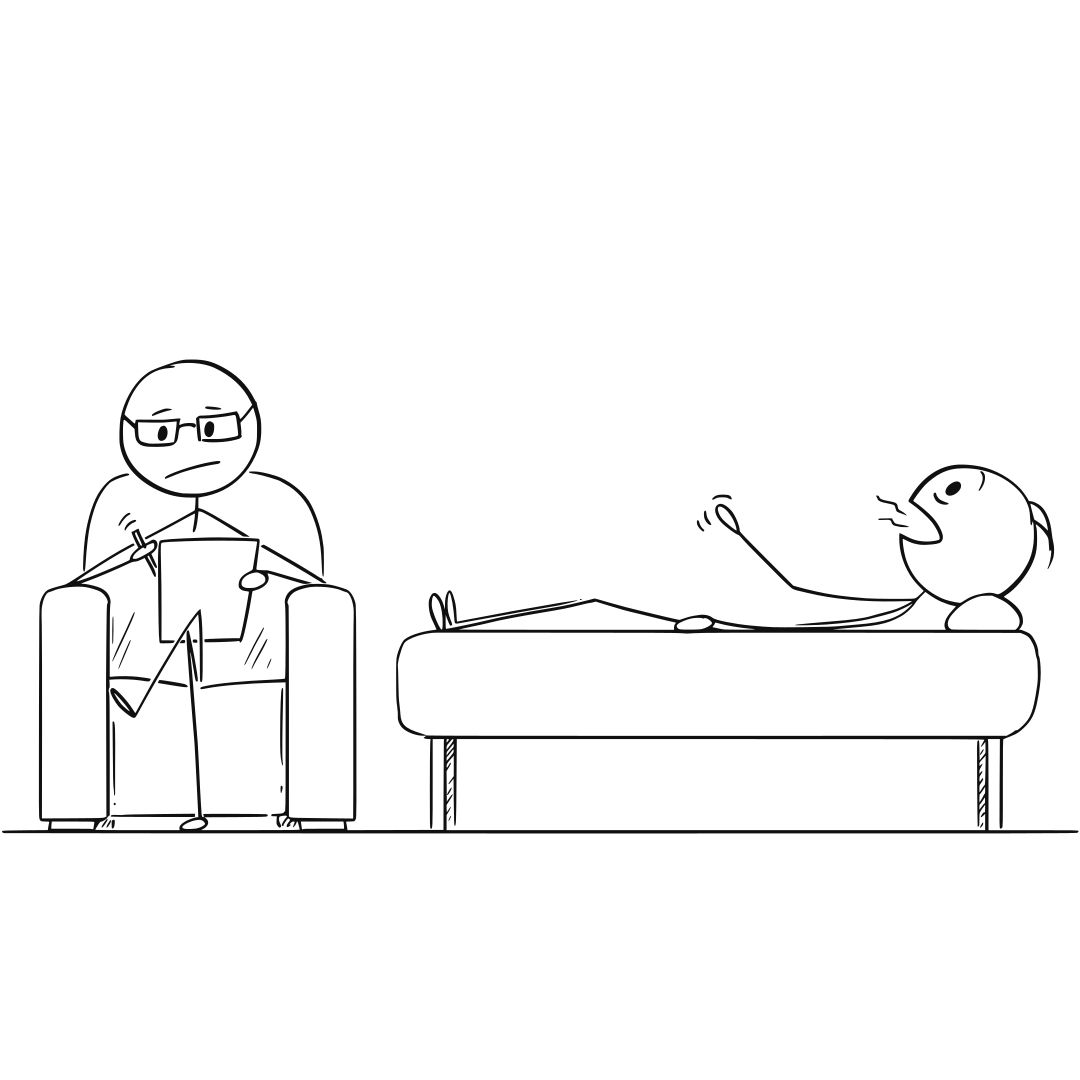
In the psychoanalytic session, free association is the vehicle for exploration. It’s like a verbal stream of consciousness, where the client is encouraged to speak without censorship, allowing thoughts and memories to bubble up from the depths of the unconscious. This technique is the analyst’s diving bell, descending into the murky waters of the psyche.
Transference and Countertransference: The Mirrors of Relationship
The therapeutic relationship in psychoanalysis is a stage where past relationships are re-enacted. Transference occurs when the client projects feelings and expectations onto the therapist, often based on significant figures from their past. Countertransference is the therapist’s emotional response to the client. These phenomena are like mirrors, reflecting the client’s internal world and providing valuable insights into their relational patterns.
Resistance: The Guardian at the Gate
As the analysis delves deeper, it often encounters resistance – the psyche’s attempt to protect itself from painful or threatening insights. This resistance is like a guardian at the gate of the unconscious, and its very presence signals that something important lies beyond. The analyst’s task is to gently work through these defenses, helping the client confront what lies beneath.
Insight and Catharsis: The Treasures of the Deep
The ultimate goal of psychoanalysis is to bring the hidden contents of the unconscious into the light of awareness. This process of gaining insight can lead to catharsis – a powerful emotional release and sense of relief. It’s like finally solving a puzzle that has been troubling you for years, or letting go of a burden you didn’t even know you were carrying.
The Long Journey
Traditional psychoanalysis is not a quick fix. It’s a long-term commitment, often involving multiple sessions per week over several years. This extended timeframe reflects the depth of exploration required to truly understand and transform the complex landscape of the psyche.
The Legacy of Psychoanalysis
While classical psychoanalysis may be less commonly practiced today, its influence on psychology and psychotherapy is immeasurable. Many modern therapeutic approaches draw on psychoanalytic concepts, adapting them to fit contemporary understanding and needs.
Psychoanalysis has gifted us with profound insights into human nature:
In essence, psychoanalysis is more than just a therapeutic technique – it’s a way of understanding the human condition. It reminds us that we are far more complex and mysterious than we often realize, and that true self-understanding requires courage, patience, and a willingness to explore the depths of our own minds.
Whether one fully embraces psychoanalytic theory or not, its core message remains powerful: by shining a light into the darkest corners of our psyche, we can find the keys to greater self-awareness, emotional freedom, and a richer, more authentic life.
Jungian Therapy | A brief summary
Exploration of the unconscious | Jungian therapy focuses on accessing the unconscious through dreams, symbols, and archetypes, offering deep insight into one’s psyche.
Focus on personal growth | It emphasizes individuation, or the process of becoming one’s true self, encouraging a deep sense of fulfillment and personal development.
Integrative approach | Jungian therapy integrates spirituality, creativity, and psychology, making it appealing to clients seeking a holistic understanding of themselves.
Understanding archetypes | The exploration of universal archetypes (e.g., the hero, the shadow) provides clients with a framework for understanding their life experiences.
Long-term self-awareness | Jungian therapy fosters a deep, enduring awareness of both the conscious and unconscious mind, leading to meaningful life changes.
Diving into the Depths | Jungian Analysis | An Overview
Jungian analysis, also known as analytical psychology, is a profound exploration of the human psyche.
It delves into the deepest recesses of the mind, illuminating the hidden corners and forgotten shadows that shape our thoughts, emotions, and behaviors.

The Analyst as Guide
In this journey, the Jungian analyst serves as a skilled and compassionate guide. They are not mere observers or interpreters, but active participants in the unfolding of the unconscious. The analyst walks alongside the analysand (the person undergoing analysis), shining a light on the symbols, dreams, and archetypes that emerge from the depths.
The Language of the Unconscious
Jungian analysis recognizes that the unconscious speaks in a language all its own – a language of symbols and metaphors. Dreams, in particular, are seen as the royal road to the unconscious. They are not merely random neurological firings, but meaningful messages from the depths of the psyche.
The analyst helps the analysand decipher this symbolic language, uncovering the hidden meanings and insights that lie within. Through techniques like dream analysis and active imagination, the unconscious is given a voice, and its wisdom is brought into conscious awareness.
Archetypes and the Collective Unconscious
At the heart of Jungian theory lies the concept of archetypes – universal patterns or motifs that reside in the collective unconscious. These archetypes, such as the Hero, the Wise Old Man, and the Great Mother, are not merely personal constructs, but shared human experiences that transcend time and culture.
In Jungian analysis, encountering and integrating these archetypes is a key part of the individuation process – the journey towards wholeness and self-realization. By confronting the Shadow (the repressed or denied aspects of the self), embracing the Anima/Animus (the inner masculine/feminine), and ultimately discovering the Self (the unifying center of the psyche), the analysand moves towards greater balance, creativity, and meaning.
The Alchemy of Transformation
Jungian analysis is not a quick fix or a superficial treatment. It is a deep and transformative process that unfolds over time. Like the alchemists of old, who sought to transform base metals into gold, the Jungian analyst and analysand work together to transform the raw materials of the psyche into something precious and whole.
This transformation is not always easy or comfortable. It requires courage, honesty, and a willingness to confront the shadows within. But through this process, the analysand can discover a greater sense of self-awareness, authenticity, and purpose.
A Unique and Powerful Approach
Jungian analysis stands apart from other forms of psychotherapy in its emphasis on the symbolic, the archetypal, and the unconscious. It recognizes that the human psyche is vast and multifaceted, and that true healing and growth require a deep and sustained engagement with the inner world.
For those who are drawn to this approach, Jungian analysis offers a rich and profound path towards self-discovery and transformation. It is a journey that can lead to greater creativity, meaning, and wholeness – a journey into the very depths of the soul.
In the end, Jungian analysis is not just a form of therapy – it is a way of life. It is a commitment to the ongoing process of self-exploration and growth, a recognition of the mystery and potential that lies within each of us. And for those who embark on this journey, the rewards can be immeasurable.
Analytic Behavioral Therapy| A brief summary
Effectiveness: Behavioral therapy has been extensively researched and shown to be highly effective in treating various mental health conditions. Its practical, problem-focused approach helps individuals develop coping strategies and change problematic behaviors.
Evidence-based: The techniques used in behavioral therapy are grounded in scientific research. This ensures that clients receive treatments that have been proven to work, increasing the likelihood of positive outcomes.
Short-term and efficient: Unlike some other forms of therapy that can take years, behavioral therapy is typically a short-term treatment. Therapists work collaboratively with clients to set specific goals and develop targeted interventions, making it a highly efficient approach.
Practical skills: Behavioral therapy emphasizes the development of practical skills and strategies that clients can use in their daily lives. Through homework assignments and in-session exercises, individuals learn to apply these skills to real-world situations, promoting lasting change.
Versatility: Behavioral therapy can be adapted to treat a wide range of mental health issues, from specific phobias to complex conditions like personality disorders. Its flexibility allows therapists to tailor interventions to each client’s unique needs and goals.
Decoding the Mysteries of Applied Behavioral Therapy| An Overview
Decoding the Mysteries of Behavior: The Role of the Behavioral Therapist
Behavioral therapists are like detectives of the why and causes of human’s behaviors. They delve into the intricate web of actions, reactions, and interactions to unravel the hidden motives and triggers that shape our behavior. These skilled professionals are trained to observe, analyze, and interpret the complex dance of human conduct, seeking to understand the underlying causes and effects that drive our actions.
The Behavior Whisperer
A behavioral therapist is not just an observer, but a translator of behavior. They possess the unique ability to decipher the language of actions, reading between the lines of what people do and say. By carefully studying the patterns and nuances of behavior, they can uncover the hidden messages and motivations that often elude the untrained eye.
This deep understanding of behavior allows them to serve as a bridge between the individual and their environment, helping to foster positive change and growth. They are the behavior whisperers, able to communicate with and influence even the most challenging of individuals.
The Architect of Change
Behavioral therapists are not content with merely understanding behavior; they seek to modify to evolve to new levels of behavior. Armed with their insights and expertise, they craft intricate behavior modification plans – blueprints for positive change.
These plans are not one-size-fits-all, but rather tailored to the unique needs and circumstances of each individual. They take into account the person’s strengths, challenges, and goals, as well as the context in which the behavior occurs. By carefully designing and implementing these strategies, behavioral therapists help individuals to:
The Versatile Specialist
The work of a behavioral analyst is not confined to any one setting or population. Their expertise is sought after in a wide range of fields and contexts, including:
| Setting | Role |
|---|---|
| Education | Helping students with learning and behavioral challenges succeed in the classroom |
| Healthcare | Assisting patients with chronic conditions to manage their symptoms and improve their well-being |
| Developmental Disorders | Supporting individuals with autism, ADHD, and other neurodevelopmental conditions to reach their full potential |
| Organizational Behavior | Enhancing productivity, communication, and teamwork in the workplace |
| Sports Psychology | Optimizing the performance and mental resilience of athletes |
| Forensic Psychology | Assessing and treating individuals involved in the criminal justice system |
The Science of Change
Behavioral therapy is not based on guesswork or intuition, but on rigorous scientific principles. Relying on evidence-based practices, drawing from the latest research and data to inform their work.
Behavioral therapy is grounded in empirical research demonstrating the effectiveness of its techniques. Numerous studies and meta-analyses have shown that behavioral interventions can lead to significant improvements in functioning and quality of life for a wide range of psychological disorders
They employ a range of techniques and tools, such as:
Questions: By asking specific questions designed to identify behaviors, the behavioral analyst offers the opportunity for autonomy, for the individual to then use these answers to modify behaviors.
Successive approximation: Breaking tasks into smaller, manageable steps
Systematic desensitization: Gradually exposing individuals to anxiety-provoking stimuli while teaching relaxation techniques
Behavioral experiments: Testing the accuracy of negative beliefs in real-life situations
Guided discovery: Therapists ask questions to challenge beliefs and broaden thinking
Learning new behaviors to reconstruct or reframe: by Identifying thought patterns to reshape perspectives, and then develop effective strategies
Activity scheduling and behavior activation: Planning activities to establish good habits and reduce avoidance
Successive approximation: Breaking tasks into smaller, manageable steps
By applying these and other scientifically validated methods, behavioral analysts are able to achieve meaningful and lasting change in the lives of those they serve.
The Empathetic Ally
At the heart of behavioral therapist lies a deep commitment to understanding and empowering individuals. Behavioral analysts are not distant observers, but empathetic allies who work closely with their clients to help them overcome challenges and achieve their goals.
They approach their work with compassion, respect, and a genuine belief in the potential of every person to grow and thrive. They listen attentively, communicate clearly, building trust and rapport with those they serve.
In a world that can often be confusing and overwhelming, behavioral analysts serve as guides and advocates, helping individuals to navigate the complexities of their own behavior and find their way to a better, more fulfilling life.
Gestalt | A brief summary
Focus on present experience | Gestalt therapy encourages clients to become more aware of their emotions and experiences in the present moment, promoting mindfulness.
Holistic view of the individual | It looks at the person as a whole, integrating mind, body, and emotions to promote self-awareness and growth.
Empowers personal responsibility | Gestalt therapy encourages clients to take ownership of their feelings and actions, promoting personal empowerment.
Emphasizes authentic self-expression | It encourages open and honest communication, helping clients express their true selves.
Creative techniques | Gestalt therapy often uses creative tools like role-playing, which can help clients explore different perspectives and emotions.
Gestalt therapy is a vibrant, experiential approach to personal growth | An Overview
Let’s dive into the essence of this transformative therapeutic modality.
The Art of Now: Embracing the Present Moment
At the heart of Gestalt therapy lies a profound appreciation for the power of the present moment. Unlike approaches that delve deeply into the past, Gestalt therapy encourages clients to fully inhabit their current experience. It’s as if the therapist is saying, “Let’s not talk about the painting of your life; let’s step into the canvas and feel the texture of the paint.”
This focus on the here-and-now isn’t about ignoring the past or future, but rather about recognizing that true change and growth happen in the present. By tuning into their immediate thoughts, feelings, and bodily sensations, clients can unlock a deeper understanding of themselves and their patterns.

The Symphony of Self-Awareness
Gestalt therapy is like learning to conduct the orchestra of your inner world. Clients are encouraged to become keen observers of their own mental and emotional landscape, noticing the subtle interplay of thoughts, emotions, and physical sensations.
This heightened self-awareness can be transformative. It’s like suddenly realizing you’ve been watching life in black and white, and now you’re seeing it in full, vibrant color. Clients often report a sense of “waking up” to aspects of themselves they’ve never fully noticed before.
The Dance of Personal Responsibility
In Gestalt therapy, personal responsibility isn’t a burden – it’s a source of empowerment. The approach encourages clients to recognize their agency in shaping their experiences and responses to life’s challenges.
This shift from a passive to an active stance can be profoundly liberating. It’s like realizing you’re not just a character in your life story, but also the author, with the power to influence the narrative.
The Alchemy of Integration
Gestalt therapy is deeply interested in how we integrate (or fail to integrate) different aspects of our experience. It recognizes that psychological distress often arises from fragmentation – parts of ourselves that are in conflict or cut off from awareness.
The therapeutic process aims to bring these fragmented parts into harmony, creating a more cohesive sense of self. It’s like taking the scattered pieces of a puzzle and finally seeing how they fit together to create a beautiful, complete picture.
Techniques That Bring Theory to Life
Gestalt therapists employ a variety of creative techniques to bring these principles into vivid, experiential focus:
The Empty Chair Technique: A powerful method for exploring internal conflicts or unresolved relationships. (LOVE THIS ONE!)
Exaggeration Exercises: Amplifying subtle gestures or expressions to bring unconscious processes into awareness.
Dream Work: Exploring dreams not as symbols to be interpreted, but as expressions of the dreamer’s current life situation.
Body Awareness Exercises: Tuning into physical sensations as a gateway to deeper emotional understanding.
The Ripple Effect of Growth
The impact of Gestalt therapy often extends far beyond the therapy room. As clients develop greater self-awareness and take more responsibility for their experiences, they often find:
A Journey of Continuous Unfolding
Gestalt therapy isn’t about reaching a fixed destination of “being healed.” Instead, it’s an ongoing process of growth and discovery. It’s about continually expanding one’s awareness, embracing new aspects of oneself, and engaging more fully with life.
In essence, Gestalt therapy is an invitation to step fully into the vibrant, complex, sometimes messy, but always rich tapestry of human experience. It’s a call to wake up to the fullness of who you are, right here, right now. And in that awakening lies the potential for profound transformation and a life lived with greater authenticity, vitality, and joy.
Dialectical Behavioral Therapy | DBT | A brief summary
Emotion regulation | DBT emphasizes emotional regulation skills, helping clients manage intense emotions effectively.
Effective for personality disorders | Especially beneficial for individuals with Borderline Personality Disorder (BPD) and those who struggle with self-harm.
Combines CBT with mindfulness | DBT integrates CBT’s problem-solving approach with mindfulness techniques for increased awareness and acceptance.
Supportive environment | It offers both individual therapy and skills training groups, fostering a supportive therapeutic community.
Crisis management skills | Clients learn distress tolerance techniques to handle crises in a more balanced way.
Play Therapy | A brief Summary
Play therapy offers numerous advantages for children’s emotional well-being and development. Here are five key benefits of this therapeutic approach:
The Power | Play Therapy | An Overview

Play therapy is a magical realm where the language of childhood reigns supreme.
It’s a place where toys come to life, stories unfold, and the deepest emotions find a voice. In this enchanting therapeutic approach, play becomes the bridge that connects the inner world of a child to the understanding and guidance of a trained therapist.
The Language of Play
For children, play is more than just a pastime – it’s their natural language, their way of making sense of the world around them. When words fail, play becomes their voice. Through the symbolic language of play, children can express their feelings, experiences, and struggles in a way that feels safe and familiar.
In the playroom, a doll becomes a confidant, a superhero cape transforms into a shield of courage, and a sandbox becomes a world where the child is the master of their own story. Each toy, each gesture, each imaginary scenario holds a deeper meaning, a clue to the child’s inner landscape.
The Therapist as a Guide
In the world of play therapy, the therapist is not a distant authority figure, but a gentle guide, a fellow adventurer in the child’s journey of self-discovery. They create a safe, non-judgmental space where the child feels seen, heard, and accepted.
Through careful observation and attunement, the therapist learns to read the subtle cues in the child’s play. They notice the themes that emerge, the characters that take shape, and the emotions that color each interaction. Like a skilled detective, they piece together the puzzle of the child’s inner world, gaining valuable insights into their concerns, fears, and hopes.
The Power of the Therapeutic Relationship
At the heart of play therapy lies the therapeutic relationship – a bond of trust and understanding between the child and the therapist. This relationship becomes the foundation upon which healing and growth can occur.
Through the therapist’s empathetic presence and reflective responses, the child begins to feel validated and understood. They learn that their feelings matter, that their experiences are real, and that they are not alone in their struggles. This experience of being truly seen and accepted can be profoundly transformative, helping the child to develop a stronger sense of self and a greater capacity for emotional regulation.
The Many Faces of Play Therapy
Play therapy is a versatile approach that can take many forms, each tailored to the unique needs and preferences of the child. Some common techniques include:
Sandbox play: Using miniature figures and objects in a sandbox to create symbolic worlds and narratives
Art therapy: Expressing feelings and experiences through drawing, painting, and other creative media
Storytelling: Using puppets, dolls, or imaginative play to explore and process difficult emotions
Role-playing: Reenacting real-life situations or creating new scenarios to practice coping skills and problem-solving
No matter the specific technique, the goal of play therapy remains the same: to help children work through their challenges, develop new skills, and find their own path to healing and growth.
A Pathway to Healing
Through the magic of play therapy, children can find their way through the maze of their own emotions and experiences. They can learn to express themselves, to cope with stress, to build resilience, and to develop healthier relationships.
For children struggling with anxiety, depression, trauma, or behavioral issues, play therapy can be a lifeline – a way to process their pain, to find their strength, and to discover new possibilities for their lives.
And for parents and caregivers, play therapy can offer a window into their child’s world – a glimpse of the joys, the fears, and the dreams that shape their young lives. It can provide a roadmap for understanding and supporting their child’s emotional needs, strengthening the bonds of love and trust that are so essential to healthy development.
Play therapy is a testament to the transformative power of play – to its ability to heal, to teach, and to illuminate the deepest truths of the human experience. It reminds us that even in the darkest of times, there is always a spark of creativity, of resilience, of hope that can be nurtured and brought to light.
In a world that often demands that children grow up too fast, play therapy offers a sanctuary – a place where they can be exactly who they are, where they can explore, imagine, and heal on their own terms. And in doing so, it gives them the greatest gift of all – the freedom to be children, in all the wonder and complexity that entails.
So let us celebrate the magic of play therapy – the laughter, the tears, the moments of profound connection and transformation. Let us honor the bravery of the children who trust us with their stories, and the dedication of the therapists who guide them on their way.
And let us never forget the power of play – its ability to light the way through the darkest of times, and to lead us all to a brighter, more hopeful future.
Couples and Family Therapy
Systemic Therapy | A brief summary
Focus on relationships | Systemic therapy looks at individuals in the context of their relationships and family systems, offering a broader perspective on personal issues.
Effective for family conflicts | It is highly beneficial for resolving conflicts within families, couples, and other groups.
Addresses patterns of behavior | By examining interaction patterns, systemic therapy helps identify and change dysfunctional dynamics.
Inclusive | It takes into account cultural, societal, and relational factors that influence individuals, making it adaptable to diverse backgrounds.
Strengthens communication | It helps clients develop better communication skills and improves understanding within relationships.
Systemic Couples therapy | An Overview
It takes two to tango!
Couples therapy through a systemic lens is like orchestrating a symphony of connection. At its heart lies the art of communication – not just words, but the intricate dance of meaning, emotion, and understanding between partners.
The Communication Tango
In the therapy room, couples learn to recognize the subtle missteps in their communication waltz. A raised eyebrow, a sigh, or a seemingly innocuous phrase can trigger a cascade of misunderstandings. Systemic therapists act as choreographers, helping couples identify these triggers and transform them into opportunities for deeper connection.
Breaking the Cycle
Negative patterns in relationships often resemble a frustrating merry-go-round of conflict. Systemic therapy aims to halt this ride by:
The Power of Perspective
One of the most potent tools in systemic therapy is the shift in perspective. Couples are encouraged to step out of their own shoes and into their partner’s, fostering empathy and understanding. This can be a transformative experience, akin to suddenly seeing a Magic Eye picture emerge from a blur of patterns.
Empowerment Through Insight
Rather than labeling one partner as “the problem,” systemic therapy views the relationship itself as the client. This approach:
A Toolkit for Lasting Change
Systemic couples therapy equips partners with a versatile set of tools:
Active listening techniques: Learning to hear not just words, but the emotions and needs behind them
Conflict resolution strategies: Transforming arguments into productive discussions
Emotional regulation skills: Managing intense feelings without derailing communication
The Ripple Effect
The beauty of systemic therapy lies in its far-reaching impact. As couples improve their dynamics, the positive effects ripple out to their families, friendships, and even work relationships. It’s like dropping a pebble in a pond and watching the circles expand outward.
In essence, systemic couples therapy is not about fixing what’s “broken,” but about unlocking the potential that exists within the relationship. It’s a journey of discovery, growth, and reconnection that can breathe new life into even the most strained partnerships. Through this approach, couples don’t just solve problems – they create a new, more harmonious melody for their shared life.
Systemic Family Therapy | The Family Tapestry Unraveling & Reweaving | An Overview
Family therapy through a systemic lens is like exploring an intricate tapestry, where each thread represents a family member, and the overall pattern depicts their complex interactions. This approach recognizes that a family is more than just a collection of individuals; it’s a living, breathing ecosystem where every action ripples through the entire unit.
The Family Dance
In the therapy room, families learn to recognize their unique choreography – the unspoken rules, roles, and rhythms that govern their interactions. A systemic therapist acts as both audience and choreographer, observing the family’s dance and gently guiding them towards more harmonious movements.
Tools of the Trade
Systemic family therapists employ a variety of creative techniques to illuminate family dynamics:
Genogram Mapping: Like creating a family tree on steroids, this technique reveals patterns across generations, helping families understand inherited behaviors and beliefs.
Communication Sculptures: Family members physically position themselves to represent their emotional connections, creating a living, breathing artwork of their relationships.
Circular Questioning: A method that encourages family members to consider each other’s perspectives, fostering empathy and understanding.
The Ripple Effect in Action
| Issue | Systemic Approach |
|---|---|
| Marital Conflicts | Exploring how parental discord affects the entire family system |
| Parent-Child Struggles | Reframing “problem” behaviors as attempts to maintain family balance |
| Substance Abuse | Examining how addiction serves a function within the family dynamic |
| Eating Disorders | Uncovering family patterns that may inadvertently reinforce disordered eating |
Breaking the Cycle
Systemic therapy aims to disrupt unhealthy patterns that may have persisted for generations. By shining a light on these cycles, families can consciously choose new ways of interacting, creating a positive domino effect that touches every member.
The Power of Reframing
A key strength of this approach is its ability to reframe “problems” as opportunities for growth. What was once seen as a rebellious teenager might be recast as a family member pushing for necessary change, shifting the narrative from blame to understanding.
A Symphony of Change
In essence, systemic family therapy is about tuning the family orchestra. It recognizes that each member plays a crucial instrument, and when they learn to play in harmony, the result is a beautiful symphony of support, understanding, and growth.
This approach doesn’t just solve immediate problems; it equips families with the tools to navigate future challenges. It’s a journey of discovery that can transform a family’s story, replacing discord with harmony and isolation with connection. Through systemic family therapy, families don’t just overcome obstacles – they compose a new, more melodious tune for their shared life journey.
Educational Support and Workshops
Educational Support | A brief Summary
Educational and Academic support, support in mathematics, and general educational tutoring offer numerous benefits to students at all levels.

Benefits of educational support via tutoring
Personalized learning experience: Tutoring provides one-on-one attention, allowing the tutor to adapt to the student’s unique learning style, pace, and needs.
Improved academic performance: Tutoring helps students grasp difficult concepts, leading to better grades, test scores, and overall achievement.
Increased confidence and motivation: Tutors create a supportive environment where students can ask questions freely, boosting their confidence and motivation to learn.
Enhanced study skills: Tutors teach valuable techniques like time management, organization, and critical thinking, empowering students to become independent learners.
Overcoming learning obstacles: Tutoring helps students address specific challenges, such as math anxiety or gaps in foundational knowledge.
Importance of affection: A warm, caring learning environment fosters a sense of safety and belonging, allowing students to engage more fully in the learning process.
Building relationships: When tutors prioritize building strong, affectionate relationships with their students, it leads to more effective tutoring outcomes.
Influence on success: Affection in education can positively influence student success by increasing motivation, engagement, and overall well-being.
Educational Support | Metaphor | Tutoring as a GPS
Tutoring can be likened to a GPS navigation system. Just as a GPS provides personalized directions to help you reach your destination, a tutor offers individualized guidance to help students achieve their academic goals.
The tutor assesses the student’s current position (academic standing), identifies obstacles (learning challenges), and plots the most efficient route (learning strategies) to reach the desired destination (academic success). Along the way, the tutor provides real-time feedback and adjustments, ensuring the student stays on track.
Lindamood-Bell | Seeing Stars | On Cloud Nine | Visualizing and Verbalizing
Lindamood-Bell offers three research-validated programs, Seeing Stars, On Cloud Nine, Visualizing and Verbalizing, that develop critical skills for reading and math using a unique imagery-language foundation.
Symbol imagery is an essential skill for successful reading and spelling. The Seeing Stars program helps those who have difficulty visualizing and remembering the letters in words, the number of letters, and the sequence of sounds and letters within words.
On Cloud Nine program was developed to stimulate the ability to visualize and verbalize mathematical concepts.The program merges concept imagery and numerical imagery with language to improve both mathematical thinking and computation. It is beneficial for students of all ages who struggle with math or need extra support.
Visualizing and Verbalizing aims to develop concept imagery as a basis for comprehension and higher-order thinking. The program provides systematic, explicit instruction to stimulate the sensory-cognitive ability to create mental images from language.
Benefits and Applications
Seeing Stars | aims to improve
On Cloud Nine | aims to improve
Visualizing and Verbalizing| aims to improve
Cogmed| A brief summary

Cogmed is a computerized working memory training program that has gained significant attention in the fields of cognitive psychology and neuroscience.
The Benefits and Applications
Cogmed aims to improve working memory, which is crucial for attention control and academic performance. The program is designed to benefit individuals with:
Cogmed| The metaphor to explain
A useful metaphor for understanding Cogmed is the concept of a Brain Gym. Just as physical exercise strengthens muscles and improves overall fitness, Cogmed acts as a gym for the brain, specifically targeting the working memory muscle.
This metaphor helps explain both the potential benefits and limitations of Cogmed. Like physical exercise, cognitive training can lead to improvements, but the extent of these improvements and their transfer to other domains may vary among individuals. Cogmed has shown promise in improving working memory and attention, particularly in specific populations.